
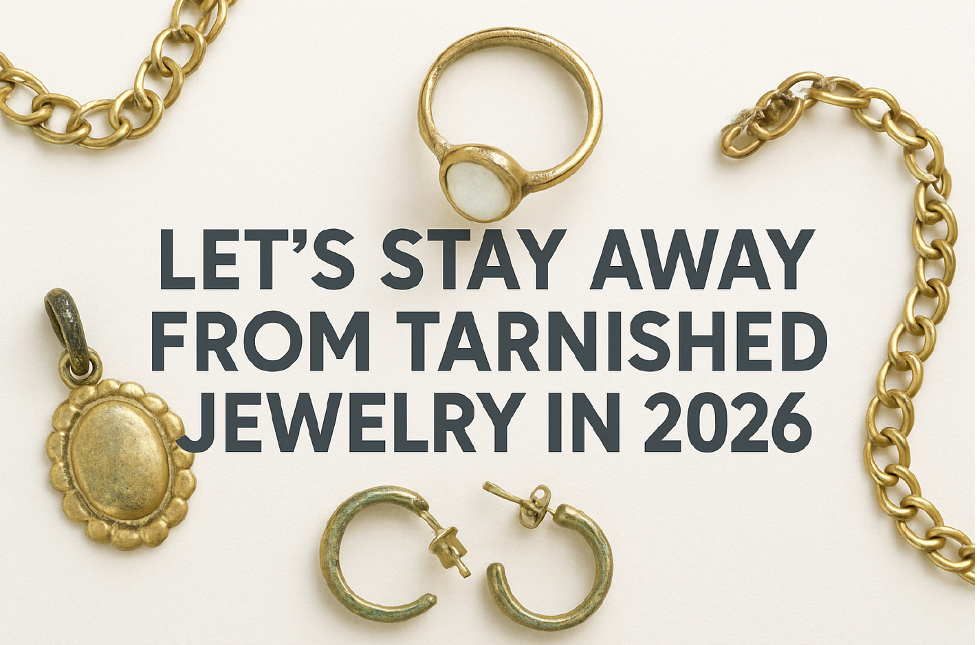
Let's Stay Away from Tarnished Accessories in 2026
We have all been there… We purchase $5 “gold” rings off a fast fashion website, we wear it for one night, then come back with green hands, stained skin and a bad attitude.
Why Jewelry Turns Your Skin Green
The most common material in cheap jewelry is copper, brass, and aluminum. When metals, specifically copper, react with the acids in sweat or with cosmetics, it creates something called copper salt. This is the oxidation process of the material and while it is not harmful to the skin, it is harmful to your confidence.
What to Shop For
Silver: Look for stainless steel or sterling silver.
Gold: Find gold filled or gold plated. Vermeil is also an option!
Unfortunately, most gold plated or vermeil jewelry will wear off with time, however you will not get that green stain. The only way to have gold jewelry that doesn't wear off is a gold filled piece.
Ditch the Green!
One of your favorite pieces is tarnishes? Well, you are in luck! Here are some of the best hacks to keep them from tarnishing.
- Coat the jewelry in a clear nail polish. While it won't last forever, it will extend the amount of time you can wear it.
- Don't get your jewelry wet! Sweat and oil is inevitable but you can take off your jewelry before you wash your hands.
- Buy sustainable jewelry that you won't throw away! It is more expensive upfront, but it will help the environment and your wallet in the long run.
Safe For The Skin, But Not For The Environment
You might think tarnished jewelry is just a weird fashion fluke, but there’s more going on beneath the green than just a stain. Tons of cheap, fast-fashion bling are tossed out every year, and the environmental cost is bigger than you’d expect.
Why It Matters
Waste from mining: To make a single “gold” ring, about 20 tons of toxic waste are generated, from stuff like cyanide, mercury, and other non-gold materials.
Fast jewelry turnover: Because a lot of costume jewelry is made cheaply and wears out (or tarnishes badly) quickly, it often ends up in landfills and burned. When jewelry with metal alloys (copper, brass, etc.) breaks down incorrectly, like burning, it can leach harmful metals into soil and water.
What Buying Non-Tarnished & Better Jewelry Helps With
Durability means less waste: Pieces that hold up longer mean fewer thrown-out accessories.
Reduced demand for mining: Buying higher quality metals (sterling silver, gold-filled, stainless steel) means less need for new mining or extracting metals wastefully.
Better material choices means less pollution: Non-tarnishing or quality finished jewelry tends to use fewer harmful coatings, fewer toxic substances, and is less likely to contribute to soil or water contamination.
Student Budget, No Problem
You don't need to cut into your entire coffee budget to upgrade your jewelry game. Some of the best wallet-friendly and tarnish-free jewelry is found on Amazon (Thanks, Jeff!)! Just make sure you look at the product details to see what it is made of. There are also a few pop-up jewelry shops in the Pryzbyla Center at the Catholic University campus throughout the year! Swing by to not only support a local business but also to elevate your look.