
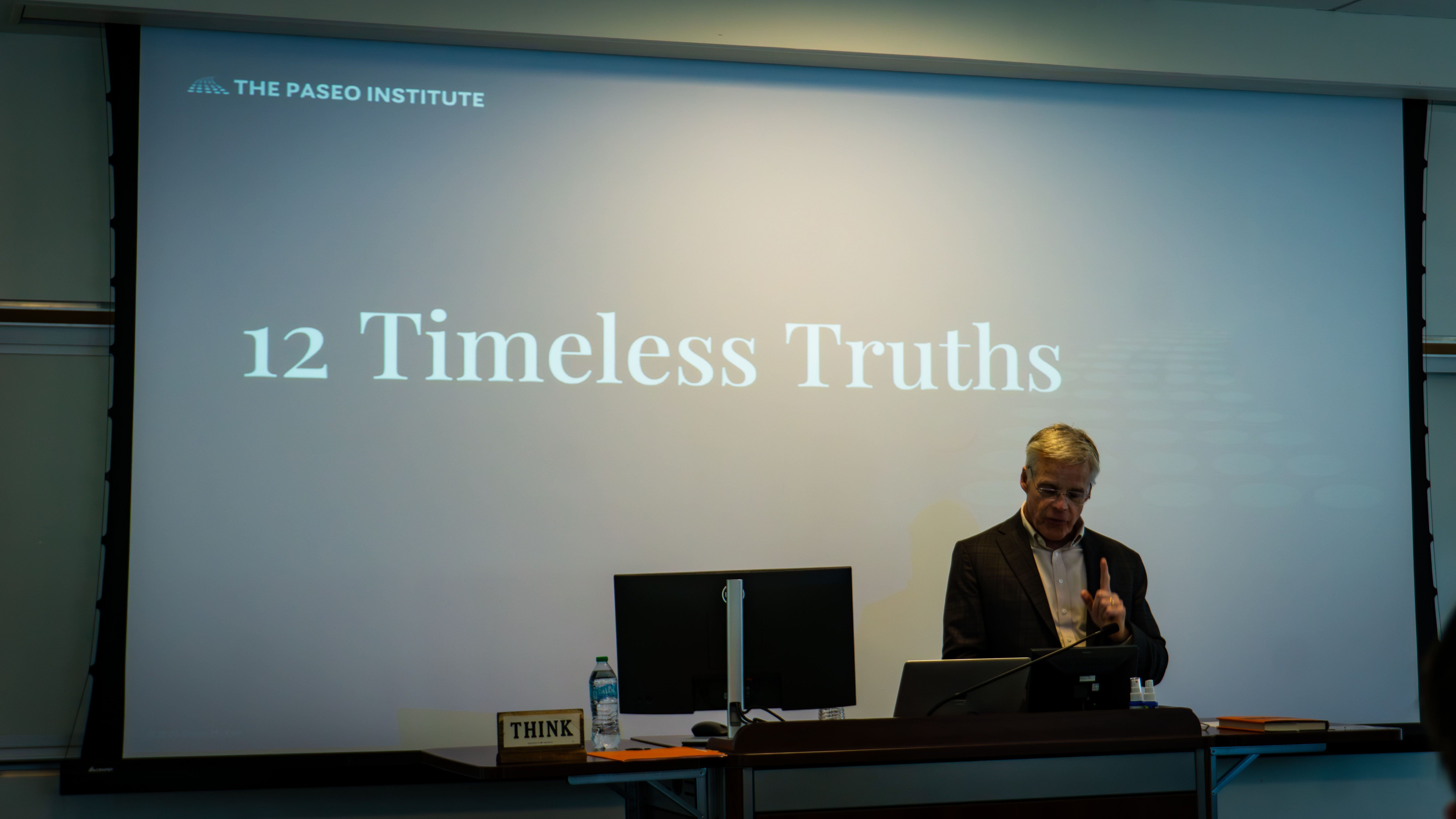
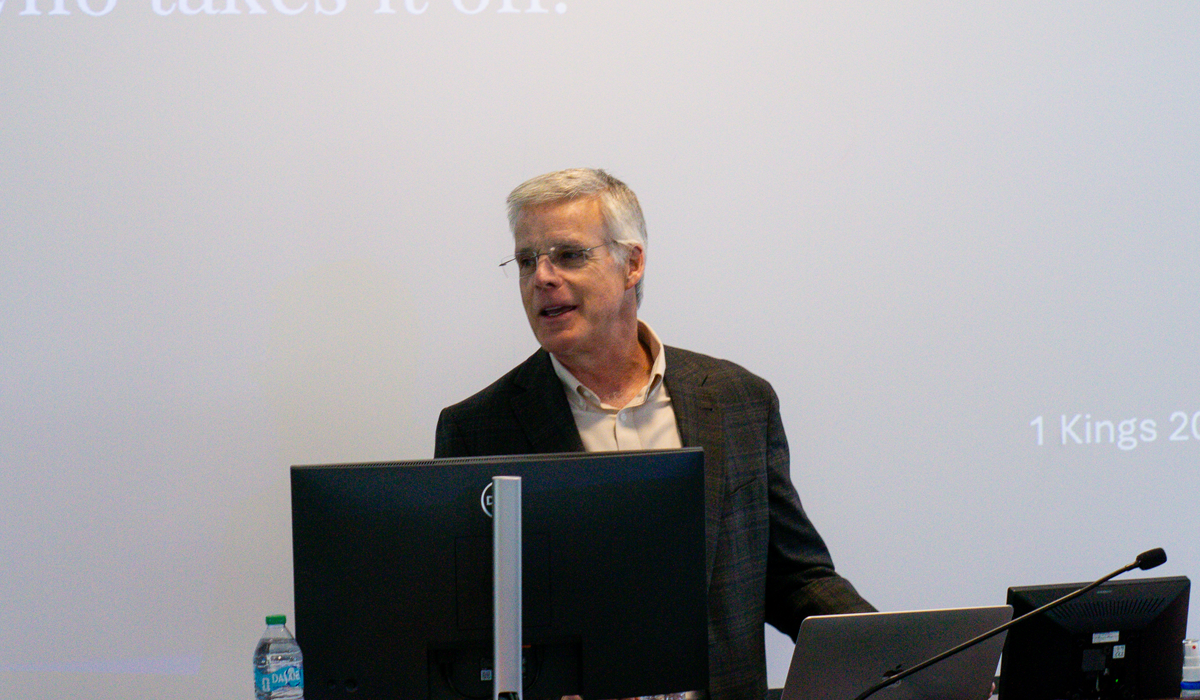
On April 22nd, entrepreneur, author, and marketing expert Steve McKee visited Professor Yoest's Management 302 class as a guest speaker, sharing hard-won insights from a career that spans decades, continents, and industries. McKee is the founder of The Paseo Institute and the co-founder of McKee Wallwork, a nationally recognized marketing advisory firm he launched in 1997 after nearly a decade at some of the world's most prestigious advertising agencies.
Under McKee's leadership, McKee Wallwork achieved remarkable recognition, earning a spot on the Inc. 500 list of the fastest-growing private companies in America in its first year of eligibility, winning the prestigious EFFIE Award for marketing effectiveness from the American Marketing Association twice, and being named Southwest Small Agency of the Year by Advertising Age (also twice). The firm was additionally named one of the nation's Best Places to Work and took home Advertising Age's National B2B Campaign of the Year award.
McKee is also an accomplished author. His first book, When Growth Stalls, draws on groundbreaking research to expose the internal dynamics that quietly derail companies. It also earned an Axiom Award and publication in four languages. His second, Power Branding (which serves as Professor Yoest's textbook), was hailed by one New York Times bestselling author as "the definitive book on modern branding." His most recent work, Turns: Where Business Is Won and Lost, weaves together science, history, philosophy, sports, and more to help readers navigate critical decision points. He has been quoted or published in outlets including The New York Times, Forbes, USA Today, and Investor's Business Daily, and has appeared on CNBC, Bloomberg, and ESPN2, among others.
McKee's Presentation: 12 Timeless Truths from America's Founding to Your Career
McKee centered his presentation around "12 Timeless Truths," drawing parallels between America's founding principles and timeless business wisdom. He opened by discussing his work on the America 250 campaign, a nationwide initiative celebrating the country's sesquicentennial. Designed to reach everyday Americans through transportation hubs (airports, trains, subways, and buses), the campaign delivers what McKee called "one-line lessons" about founding principles. He described it as "civic education disguised as an advertisement."
But McKee quickly shifted focus to challenge the mostly Gen Z audience. After soliciting stereotypes about baby boomers ("selfish," "entitled," "self-righteous"), he flipped the exercise, asking students to name Gen Z stereotypes: "screen-addicted," "anxious," "impulsive," "don't want to work." His lesson? "If you want to stand out in your generation, look at all the negative stereotypes and be the opposite."
The core of McKee's talk was his 12 principles, each illustrated with stories from the founding fathers and his own career:
Life is about relationships. McKee emphasized that business success flows from trust and connection. Drawing from When Growth Stalls, he identified lack of consensus as the number one key to business failure. He noted that the Declaration signers (22 lawyers, 18 merchants, 14 farmers) came from vastly different backgrounds yet formed lasting bonds. Thomas Jefferson and John Adams, despite a bitter political falling out, reconciled before both dying on July 4, 1826, exactly 50 years after signing the Declaration.
Humility is underrated. McKee highlighted George Washington's repeated refusals of power, noting, "That's why he's still Washington."
Integrity is indispensable. Quoting Proverbs 22:1, McKee stressed that "a good name is more desirable than great riches." He warned students that both building a good name and great wealth take work, but "great wealth can be lost and found again. A good name can't."
Personhood over position. McKee shared how a businessman took time to meet with him when he was a struggling 22-year-old fundraiser, a small act of dignity he never forgot and always repaid.
You are responsible for you. McKee urged students not to wait for training. In his first marketing job, working from a 700-square-foot apartment, he read 24 books on marketing and skipped a rung on the career ladder as a result.
You are what you write. McKee didn't mince words: "When you send me an email and it has a typo in it, what's my conclusion? You either don't know or you don't care. Neither is good."
Meetings are a medium of exchange. Instead of asking "what will I get?", McKee encouraged students to ask "what can I give?" at every meeting.
Time is money. McKee emphasized respecting others' time and choosing the right communication medium (text, email, phone call, or in-person meeting).
If you break it, don't fake it. McKee shared a story of an accounting technician who came to him in tears over a $75,000 mistake. Because she admitted it immediately, they were able to circumvent most of the damage. "The worst thing you can do is have somebody call you on it," he said.
Not your fault? Still your fix. Leaders get the problems no one else can solve, McKee explained, referencing George Washington at Valley Forge.
A proverb a day paves the way. McKee encouraged students to read a chapter of Proverbs daily, calling it "the ultimate source of timeless truth."
Your epitaph is already being written. McKee closed by challenging students: "What are you going to do with your chapter of the American story?"
On artificial intelligence, McKee offered a cautionary perspective. While acknowledging he uses AI frequently, he warned students about outsourcing skills they haven't yet developed: "If you never learn how to do it, you just give up your agency." He emphasized that AI lacks a soul, empathy, and creativity ("the combination of two previously unrelated items"). His advice: "Focus on HI, not AI: human intelligence."